product
What Makes A.N.T Different From Other Note Apps?
Most note apps help you capture something. A.N.T is built for what happens after that.
Most note apps help you capture something. A.N.T is built for what happens after that.
The difference is not just voice notes, transcription, or a cleaner summary. A.N.T understands what you captured, pulls out the useful pieces, and puts them where they belong.
The problem was never just writing things down
If you like taking notes, the hard part is usually not the act of writing. You can type something into a notes app. You can record a voice memo. You can save a meeting transcript. You can paste a thought into a document. Capture is available everywhere.
The real problem shows up later. Where did that thought go? Was it in the meeting app? The phone notes app? A voice memo? A folder you meant to clean up? Did you type enough detail to understand it later, or did you save a half-formed sentence that made sense for five minutes and then turned useless?
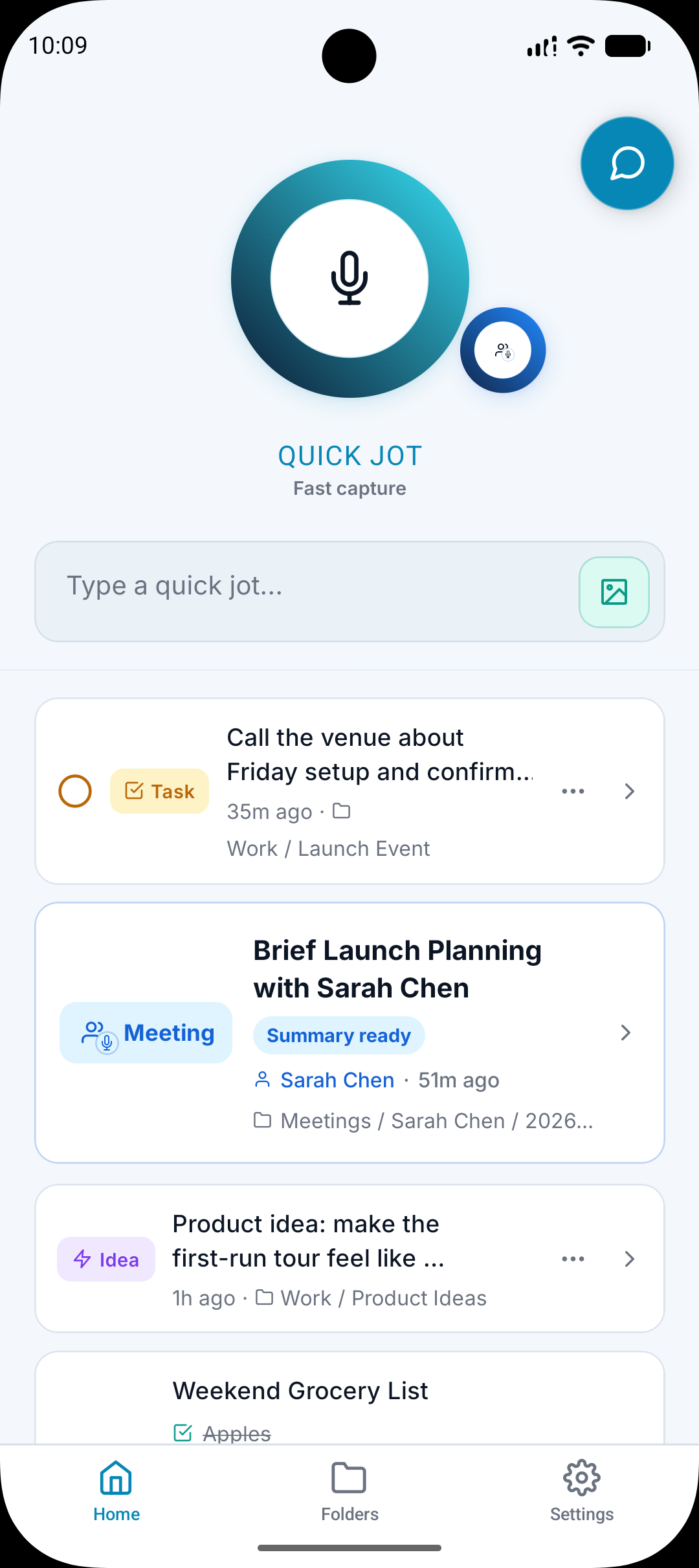
That was the problem behind A.N.T. The goal was not to build another place to dump notes. The goal was to make it easier to capture a thought while it is fresh, then let the app handle the structure afterward.
Capture-everything tools can create a new sorting job
There is a place for tools that record everything. Long meetings, interviews, classes, and calls can benefit from a full transcript and a searchable record.
But capturing everything creates a different problem: now you have to dig through everything.
For a business owner, that can mean meeting summaries, client calls, random ideas, reminders, launch notes, content ideas, grocery lists, and personal tasks all competing for attention. The AI may summarize the recording, but the useful parts still need somewhere to go.
Capture only
A transcript, voice memo, or summary lands in a general pile. You still have to find the useful parts later.
Capture plus organization
The useful parts become structured notes, tasks, lists, reminders, and folders while the source remains available.
A summary is not the same thing as organization. A transcript preserves the source. A summary compresses the source. Organization separates the useful parts and files them into a structure you can actually use later.
What A.N.T does differently
A.N.T is designed around the post-capture workflow.
Capture the thought quickly
Record it, type it, or bring in audio without stopping to design the note first.
Identify what kind of information it contains
A rough capture may include a note, task, list, reminder, meeting, or idea.
Turn the useful pieces into structured outputs
A.N.T creates outputs that match the thought instead of forcing everything into one generic summary.
File those outputs where they belong
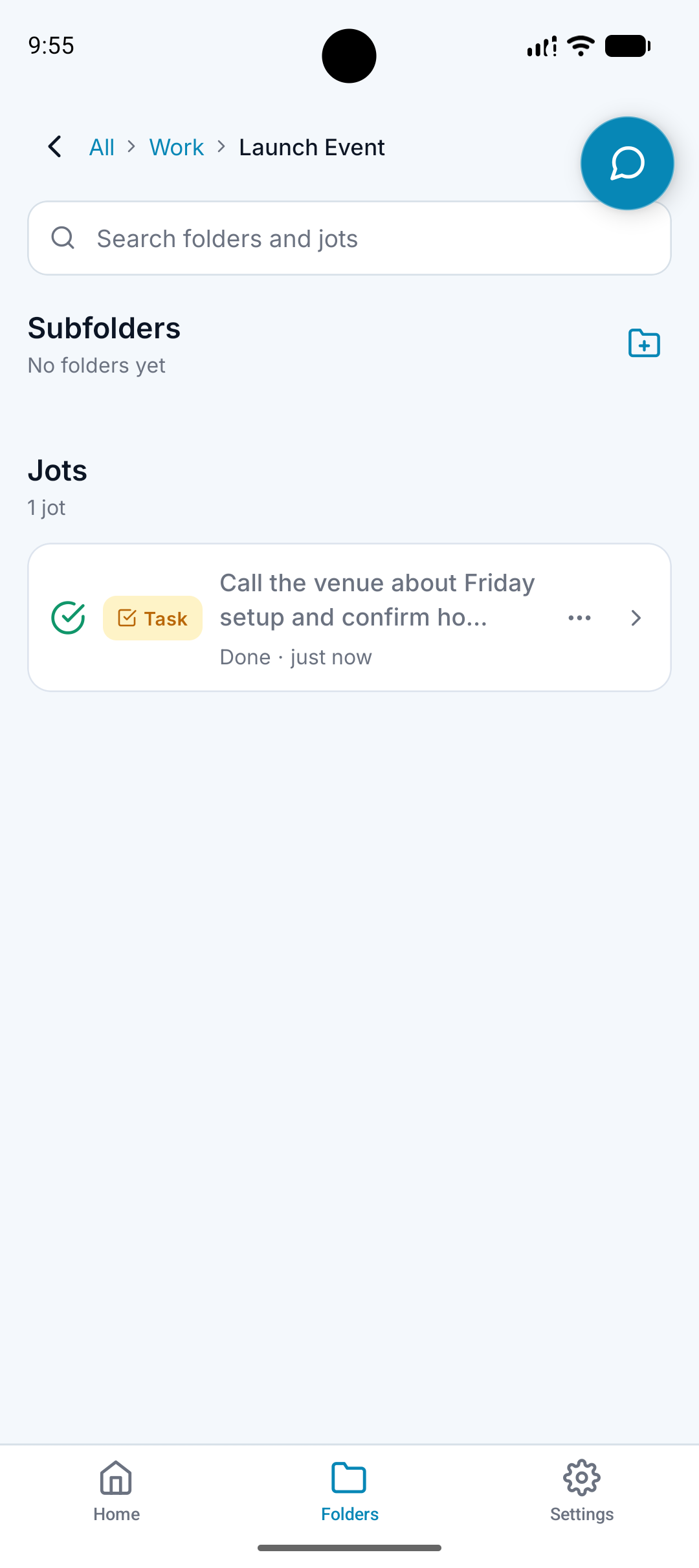
A.N.T uses folders and subfolders as part of the organization layer.
Let the user inspect and correct the result
The source, filing decision, and correction path stay visible.
That means one rough capture can become more than one useful thing.
When you capture everything, digging through what you captured becomes a task on its own.
A.N.T is built around folders because folders create context
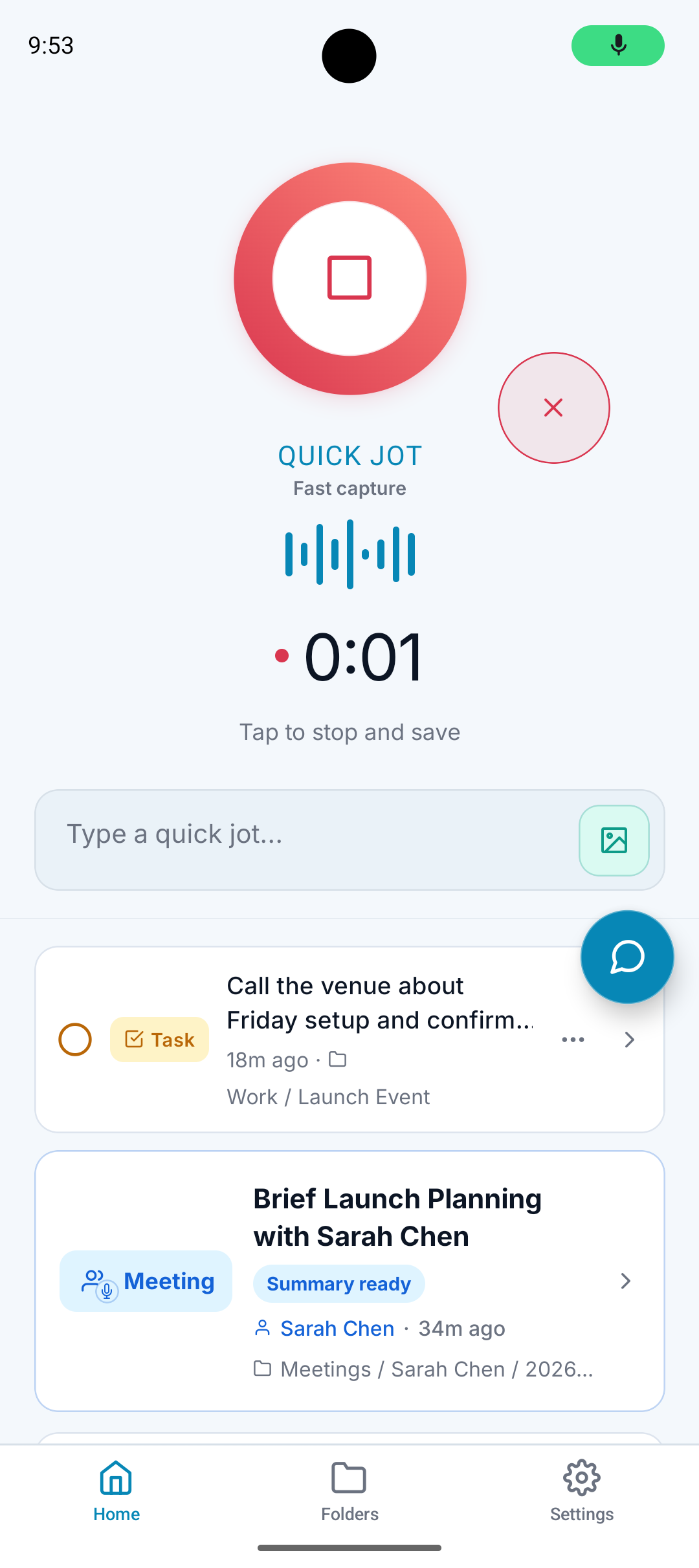
Search is useful, but search works better when the system has context. If every capture lands in one giant feed, the user has to remember the right words to search for. The AI also has to guess from a larger pile of loosely related information.
Folders give the person and the AI a shared map. Work. Personal. Home. Family. Clients. Content ideas. Meetings. Projects.
Those folders are not just decoration. They tell the system how the user thinks about their life and work. A.N.T can use that structure when deciding where a new capture belongs.
The output matches the thought
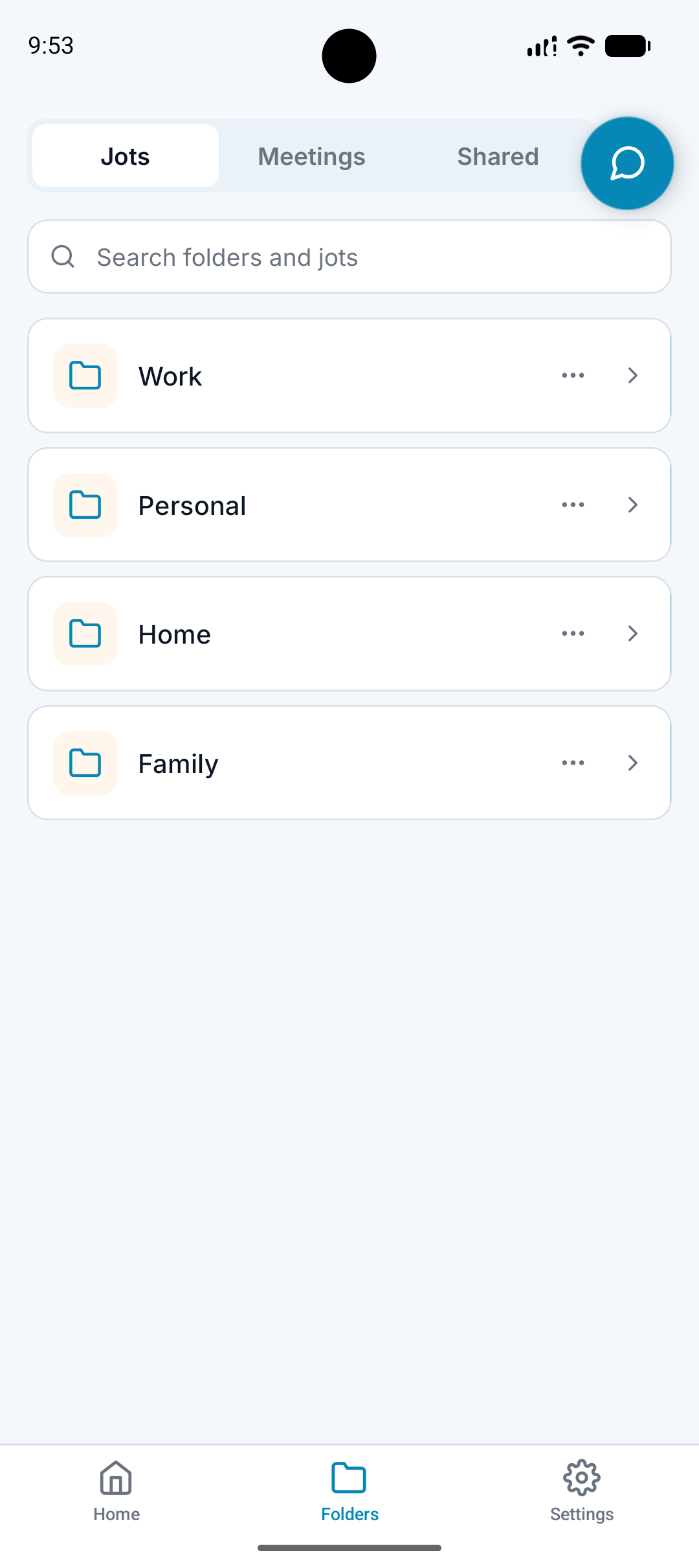
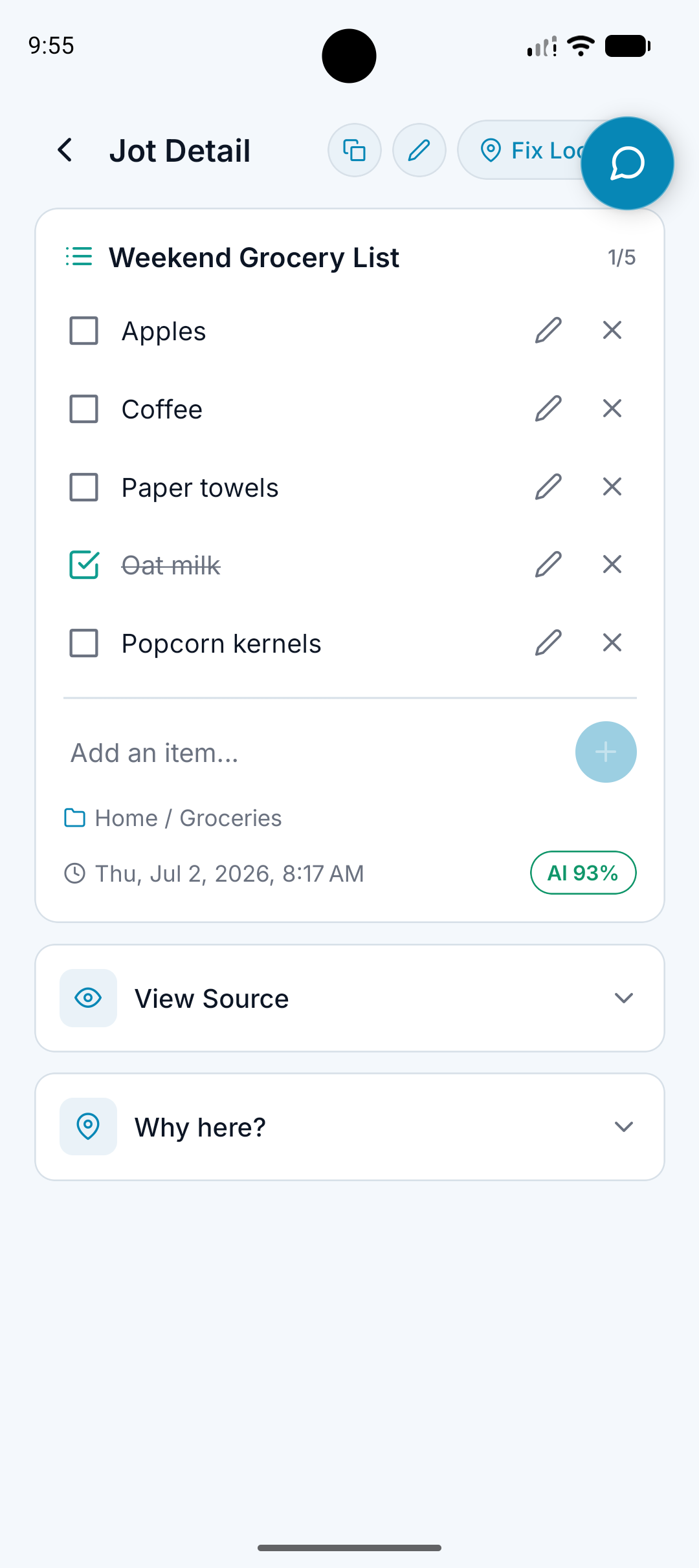
Not every capture becomes the same kind of note. If you capture five items to buy, A.N.T can turn that into a list. If you capture a follow-up before a trip, it can become a task or reminder. If you capture a business idea, it can become an idea note under the right project.
The user does not have to decide all of that upfront. They can capture the thought naturally and let A.N.T create the right kind of output.
The source still matters
AI can clean up grammar, create titles, pull out tasks, and organize information. That does not mean the original disappears.
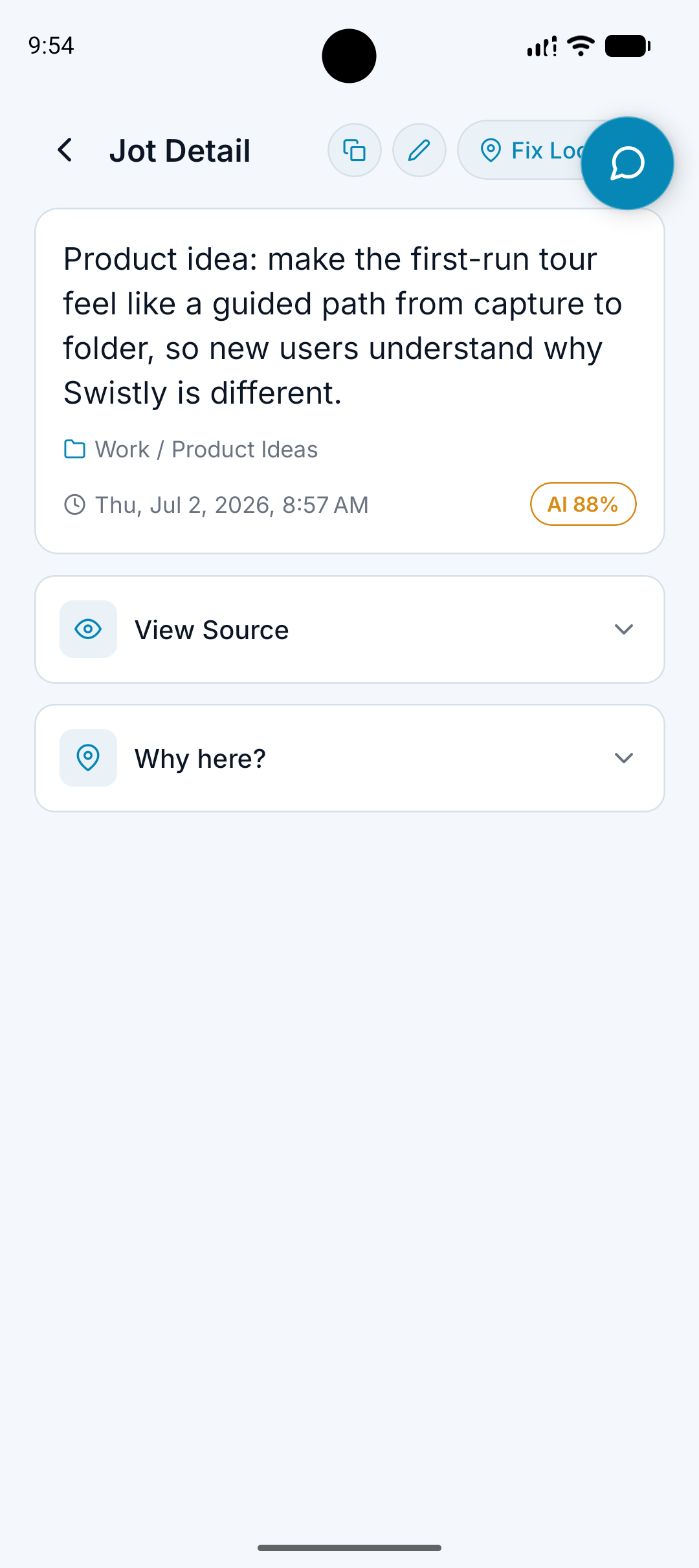
The original source matters because AI can be wrong. Speech-to-text can miss a word. A summary can over-compress. A task can lose context if it is pulled out too aggressively.
A.N.T makes the organized version useful while still keeping the source available when supported. That gives the user both speed and a way to check what was actually captured.
The goal is not to replace your words
The goal is to make your words usable while keeping enough source context to verify what was actually captured.
When A.N.T is not sure, the user stays in control
A.N.T is not built on the idea that AI always knows. The app uses confidence. If A.N.T is highly confident about where a note belongs, it can file it quickly. If confidence is lower, the app can prompt the user and ask whether the location needs to be corrected.
The user can move the note to another folder or create a new folder. When they do that, the correction becomes a signal. A.N.T can learn from the way the user organizes their own notes and use that information next time.
So the system is not just organizing once. It is adapting.
Who A.N.T is for
A.N.T is especially useful for business owners. Business owners are constantly switching contexts. A customer asks something. A marketing idea comes up. A follow-up needs to happen. A meeting creates tasks. A family reminder hits in the middle of the workday. A content idea shows up while driving.
Those thoughts are valuable, but they are often inconvenient. A.N.T is built for that moment: capture it now, organize it after.
It is also useful for ADHD users, creators, and busy people who constantly want to write things down but do not want to maintain a perfect filing system manually.
For ADHD users specifically, the point is not to make a medical claim. The point is practical: when thoughts move quickly, the capture system has to move quickly too. If taking the note requires too many steps, the thought may be gone before it is saved.
Who A.N.T is not trying to replace
A.N.T is not trying to be every capture device. If someone wants an all-day recorder, a dedicated all-day recording device may be the right product. That is especially true if the goal is to record for long stretches without draining a phone battery.
A.N.T can still fit into that world. The long-term goal is for A.N.T to connect with more note-taking platforms and physical note-taking devices so people can bring outside captures into the same organization layer.
But the core value is different. A.N.T is for people who want to capture what matters, organize it immediately, and find it later.
The simplest way to understand A.N.T
Most note tools ask
Can I capture this?
A.N.T asks
What is this, where does it go, and how will I find it later?
That is the difference.
Try it with one messy thought. Not a perfect note. Not a polished prompt. Just the kind of thing you would normally lose in a random app, voice memo, or half-written note. Say it naturally. Let A.N.T turn it into something useful.